Trecastelli – The Nora de’ Nobili Museum

Located at Villino Romualdo in the centre of Ripe, a hamlet in the new Trecastelli municipality, the museum contains a splendid collection of works by the painter Nori de’ Nobili, a woman, artist and intellectual of outstanding talent who has unjustly fallen into oblivion on the contemporary artistic scene. The painter’s life and artistic development is described in approximately seventy works, spanning from her years in training, earliest works, right up to the evolution of the second phase of her life.  Eleonora de’ Nobili was born in Pesaro in 1902, her parents were Carlo de’ Nobili and Luisa Augusti. She …

Scopri di più

Morro d’Alba – La Scarpa

The only example of an indoor chemin de ronde which runs along the entire fortified wall, flanked by arches on one side, and the walls of houses and ancient entrances on the other. A vantage point where your gaze can wander from the surrounding countryside and sea, from the coast of Senigallia to the slopes of the Conero, the peaks of San Vicino or the Umbria-Marche Apennines foothills up to the Sibillini Mountains. Once it had served its military purpose, in around the mid 17th century the authorities granted permission for the construction of homes on the walls.

Morro d’Alba – The “Utensilia” Museum and the Castle Caves

Located beneath the town hall building, accessible via the “la Scarpa” chemin de ronde, the new site of the Sharecropping Culture Museum hosts an effectively pondered collection of artefacts from the life of local farmers. The exhibition presents a selection of tools created by peasants and used in the fields, at home and for livestock, grouped into different themed halls. Its underground area is truly fascinating: a thick network of caves, often connected by tunnels, a veritable underground village which develops beneath the entire chemin de ronde and spreads out towards the fortress centre, creating rooms of different sizes, illuminated …

Scopri di più

Senigallia – Foro Annonario

Foro Annonario, designed by the Senigallia born architect Pietro Ghinelli in 1834, is a symbolic location of Senigallia and its role as a supreme urban space has remained unchanged since its construction. The square itself constitutes the forum’s heart, delimited by a complex of 24 columns in Doric style. The old fishery is nestled beneath the shade of the portico, sheltered from the sunlight which bathes it only at sunset. Foro Annonario is also a fascinating venue for an array of cultural events and performances. Its recent reconstruction has also transformed it into the cultural heart of the city: currently, …

Scopri di più

Senigallia – Palazzo del Duca

Illustrious guests of the Francesco Maria II Della Rovere, Duke of Urbino, would admire military parades in the square, from the building’s windows. Inside, a splendid coffered ceiling revokes joyous atmospheres, festivities as well as satiric allusions to political power and culture: the maestro Zuccari paints carnivalesque themes, depicting an imaginary, upside down world, where children, represented by cherubs, command adults, and the poor prevail over the rich. The building faces out onto the eponymous square, named after Giovanni Della Rovere. The Square is unique for Renaissance times, since there is no religious building overlooking it. The so-called 17th century Fontana …

Scopri di più

Senigallia – Palazzetto Baviera

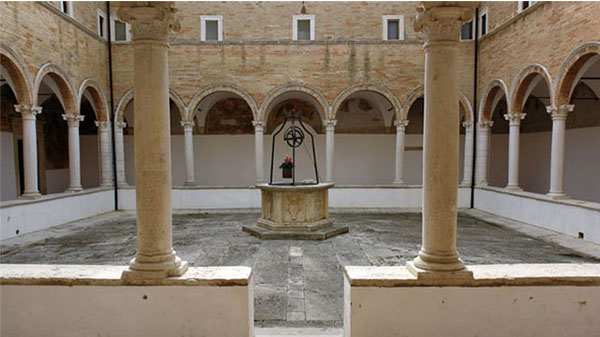
The building became the property of the Baviera family in 1512 until 1956, when the family donated it to the municipality of Senigallia, along with all its furnishings. The colonnade at the entrance with the well in the centre offer a magnificent prelude to what awaits inside, especially on the second floor. With its stuccoed ceilings, this is one of the city’s most magnificent treasures. Unmissable.

Senigallia – La Rotonda

Inaugurated on the 18th July 1933, it soon rose to fame as a prime entertainment location, a veritable temple of light Italian music during its golden age in the 1950s, where top stars would perform. La Rotonda a Mare, a harmonious example of seaside architecture, is the result of numerous vicissitudes, demolitions, projects and reconstructions, starting from the Belle Epoque. La Rotonda has always meant a lot of things to the people of Senigallia: it is a place for meeting and socialising, a venue of enjoyable entertainment opportunities and a symbol of the city’s artistic and cultural vitality. A precious …

Scopri di più

Senigallia – La Fenice Archaeological Site

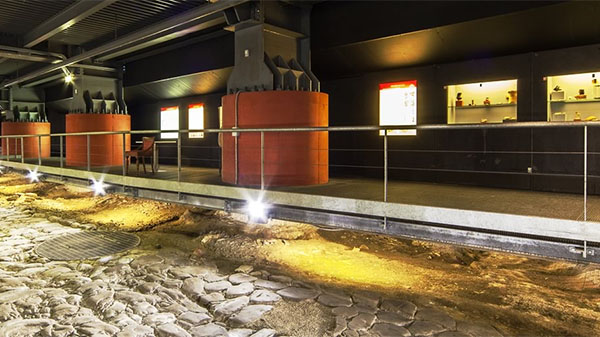
Senigallia’s Roman origins have been known and visible for some time now, in the foundations of the Rocca Roveresca fortress, however in 1989, during works for the new theatre La Fenice, artefacts dating back to the 2nd and 3rd centuries AD inspired new excavation campaigns.  Here you can see a cross section providing invaluable insight into the daily life of Ancient Romans. Today the La Fenice Archaeological Site is one of few in Italy where it is possible to admire the remains of buildings from Ancient Roman times as well as artefacts found at the site. A visit to the La …

Scopri di più

Corinaldo – The Sanctuary of Saint Maria Goretti

The Diocesan Sanctuary of Saint Maria Goretti is located on the summit of the historic centre and is easily identifiable in virtue of the Church of Sant’Agostino bell tower which soars above Corinaldo’s roof tops. The remains of the Saint’s mother, Assunta, who died in Corinaldo in 1954, are located to the left of the entrance, whereas to the right we have those of Alessandro Serenelli. A silver urn containing a bone from the Saint’s arm is positioned next to a wooden sculpture of Saint Maria Goretti  on the central altar in white Carrara marble, the very arm with which …

Scopri di più

Corinaldo – Church of the Incancellata

Constructed around a statuette, originally as a small church. The sheer number of worshippers and pilgrims which flocked to adore the sacred and miraculous image convinced the Gonfalon fraternity to erect a caretaker’s residence and a shelter for pilgrims, later transformed into a church. Once a small stream flowed in front of it, channelled into a well inside the church, the site of miraculous healing episodes. Prelates, cardinals, princes and the humblest of men would all flock to venerate this sacred image, drink and wash in these prodigious waters. This is the church where Saint Maria Goretti went to pray. …

Scopri di più